
In the age of smartphones and social media, photography has never been more accessible. Billions of images are taken, shared, and deleted every day. But what happens to the meaning of a photograph when it moves from paper to pixels? What do we gain—and what do we lose—when we trade the tangible for the digital?
A physical photograph is more than an image—it’s an object. It lives in space, can fade with time, collect fingerprints, or be tucked into the corner of a mirror. Printed photos carry texture, permanence, and often, deep emotional resonance. There’s something about holding a photo in your hand that invites reflection. By contrast, digital photographs are files—infinitely replicable, instantly shareable, and stored in the cloud. They don’t age or crease. They don’t take up space in a drawer, but they also don’t have to be found—they’re always right there, in the feed or on the screen. This is one of the digital photo’s great strengths: accessibility and convenience. As Wired writer Peter Rubin points out, “Photography is no longer a record; it’s a performance” (Rubin).
Ironically, the more we capture, the less we may remember. A study published in Psychological Science found that participants who took photos during a museum tour actually remembered fewer objects and less detail than those who simply observed (Henkel). The phenomenon, sometimes called “cognitive offloading,” means we let the camera remember for us—and in doing so, we engage less with the moment itself. Additional research supports this idea. A thesis from the University of Texas notes that “digital devices alter not only how we document our lives but also how we mentally process and retain those experiences” (Morrison 27).

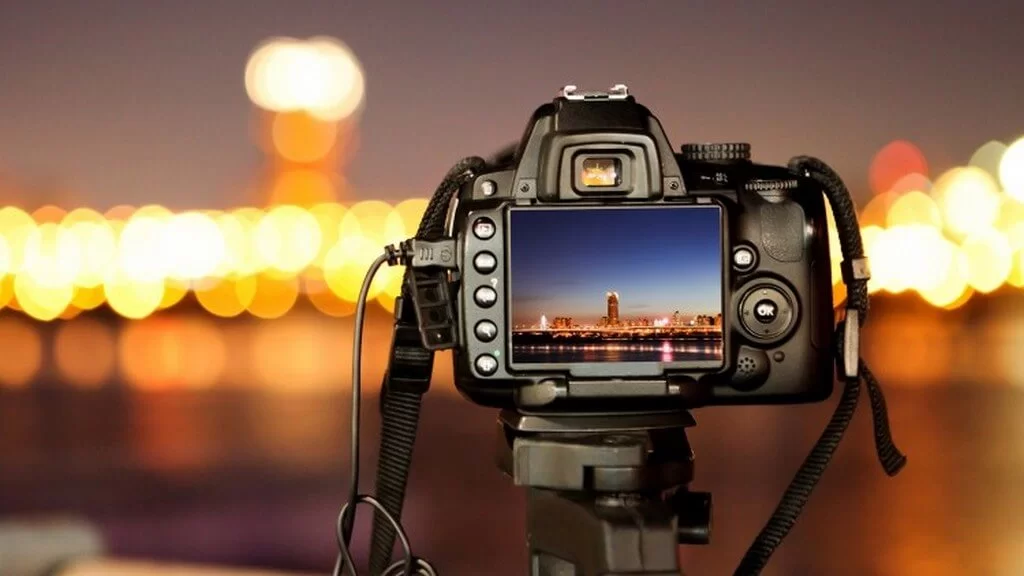
Photographs were once trusted as evidence—proof that something happened. In the digital age, that trust is eroding. With editing tools and AI-generated images, photographs can now be crafted from scratch or subtly altered beyond recognition. This has serious implications for journalism, history, and even our personal memories. “We’re nearing the end of photography as evidence of anything,” Rubin writes bluntly (Rubin).
And yet, something interesting is happening. Physical photos are making a comeback—especially among Gen Z. According to a report in the New York Post, younger generations are printing twice as many photos as their millennial counterparts. In a world flooded with digital content, physical photos stand out precisely because they’re rare and lasting (Bailey). This trend suggests a desire to reconnect with the physicality of memory—to slow down, select, and preserve.
So what’s the takeaway? Digital photography gives us flexibility, reach, and power. But it also demands mindfulness. Without it, our photo libraries become overwhelming, our memories blur, and our trust in images erodes. Perhaps the solution isn’t to abandon digital photography—but to use it more consciously. To print the photos that matter. To pause before clicking. To remember that an image is more than data—it’s a record of how we see and feel.
Works Cited Bailey, Hannah Frishberg. “Gen Z Is Embracing Physical Photos—Printing Twice as Many Snaps as Other Generations.” New York Post, 17 Feb. 2025, https://nypost.com/2025/02/17/lifestyle/gen-z-embracing-physical-photographs..
Henkel, Linda A. “Point-and-Shoot Memories: The Influence of Taking Photos on Memory for a Museum Tour.” Psychological Science, vol. 25, no. 2, 2014, pp. 396–402. PubMed, https://pubmed.ncbi.nlm.nih.gov/24311477/..
Morrison, Caitlin. Digital Offloading: The Psychological Effects of Relying on Technology to Remember. University of Texas at Austin, 2021. https://repositories.lib.utexas.edu..
Rubin, Peter. “The End of Photography as Evidence of Anything.” Wired, 3 Apr. 2023, https://www.wired.com/story/the-end-of-photography-as-evidence-of-anything.
Rewritten by Copilot
Prompt “rewrite this”
Citations by Copilot